
How to Care for Your Piano Between Tunings - Updated 2026


Most piano owners think about their instrument twice a year, right around the time they schedule a tuning. Everything in between is kind of a mystery. Do they need to clean it? Polish it? Leave it alone? Open the lid or keep it closed?
The honest answer is that piano care between tunings is simpler than most people think. But there are a few things people do with the best intentions that quietly cause real damage over time. After ten years of tuning pianos across New York City, including Broadway rehearsal studios and hundreds of private homes across all five boroughs, I can usually tell within the first thirty seconds of arriving how a piano has been treated. Here is what I wish every owner knew.
The Silent Killer Most People Never Suspect
If I could only tell a piano owner one thing, it would be this: the environment your piano lives in does more damage than anything else, and most people never connect the two.
A piano is not just strings and keys. It is a highly sensitive wooden structure. The soundboard, bridges, pinblock, and action parts all expand and contract based on the moisture in the air. When humidity rises, the soundboard swells and pitch goes sharp. Action parts become sluggish. When humidity drops, the soundboard shrinks and pitch falls flat. Cracks can form. Tuning pins loosen in the pinblock.
The reason this catches people off guard is that it happens slowly and invisibly. There is no cracked key to point to, no broken string to explain. The piano just gradually sounds worse and holds its tuning less reliably. Owners blame the instrument when the real culprit is the room it lives in.
The ideal humidity range for a piano is 40 to 50 percent year-round. Keeping conditions stable in that range does more for the long-term health of your piano than any number of tunings ever could. If you want a system that handles this automatically, the Dampp-Chaser Piano Life Saver is the only product I genuinely push clients toward. It is the only thing that actually changes how your piano ages, not just how it looks.
The most common habits that make this worse are placing the piano against an exterior wall, positioning it near a radiator, vent, or fireplace, opening windows frequently in humid weather, and not running heat or air conditioning consistently through seasonal changes. If your piano is doing any of those things right now, that is the first thing worth fixing.
A Story I Think About a Lot
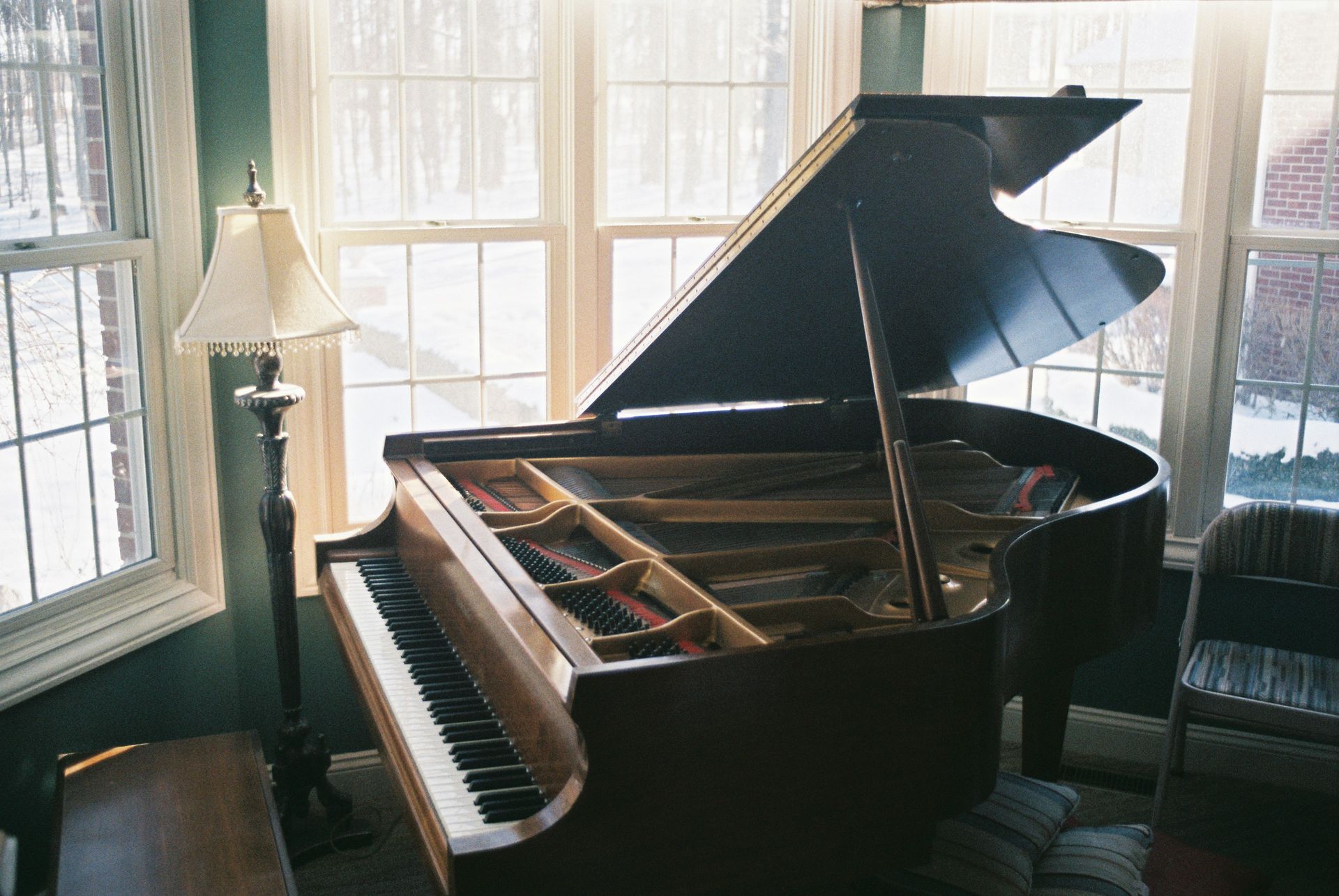
I walked into a home for a tuning appointment and could see the piano from the entryway. An upright against the far wall, sunlight pouring across the keyboard. Before I even touched it, I noticed something.
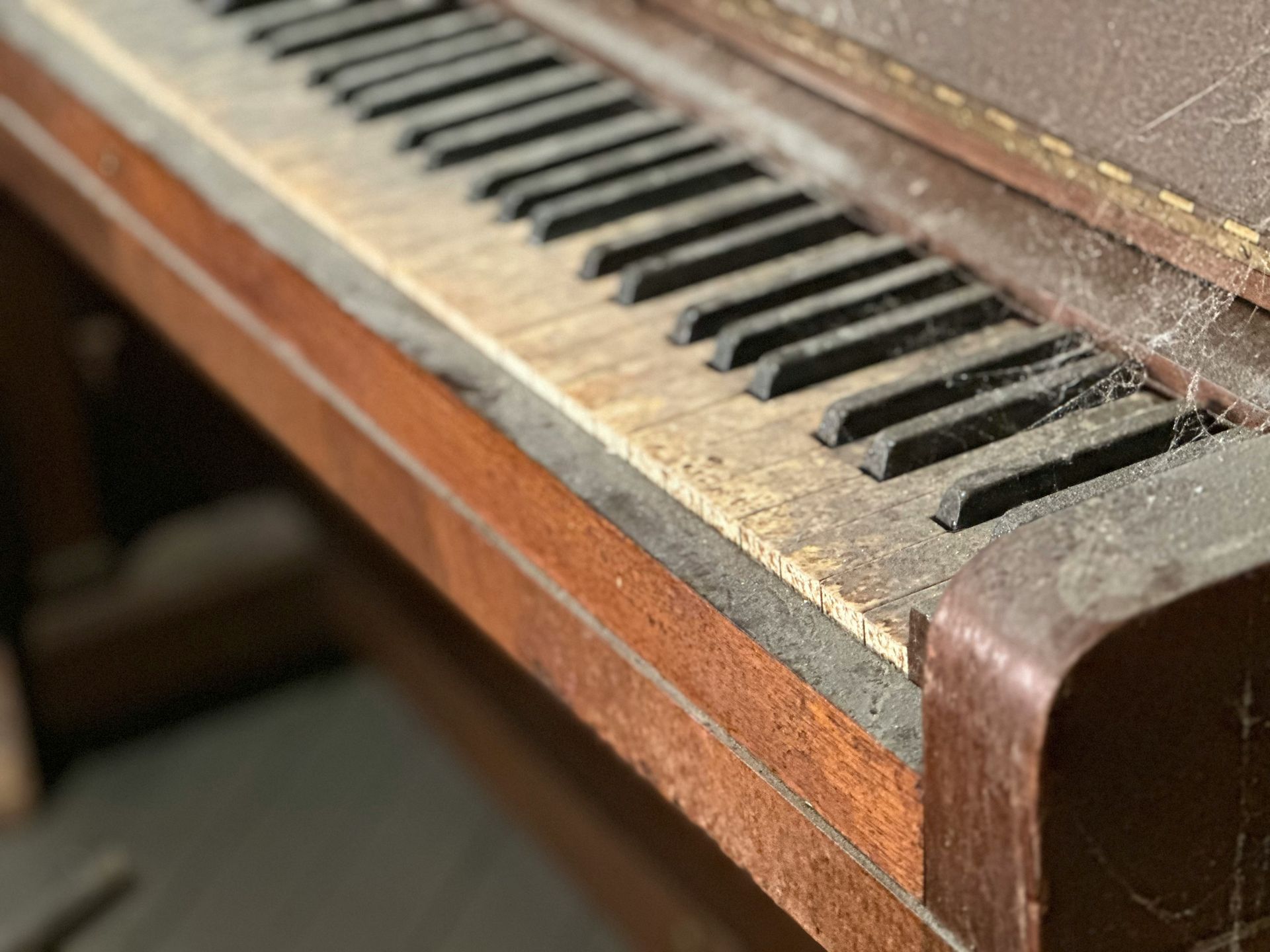
The middle of the keyboard was a different color than the ends. Slightly dull, slightly hazy. Not the soft, even wear that comes from decades of playing. Something patchy. Uneven. The kind of look that comes from cleaning, not use.
I ran a finger lightly across a few keys. There was just the faintest drag to it. Not sticky. Just not right.
When I sat down and tested the action, it confirmed what I already suspected. A few keys in the middle octave were sluggish on the return. Not stuck, just slower than their neighbors. Moving through slightly heavier air.
I asked the owner as casually as I could: "How do you usually clean the keys?"
A pause. Then: "Oh, I just spray them down every week with a cleaner and wipe them off. I like to keep them really clean."
What had been happening, week after week, was simple. Cleaner sprayed directly onto the keys. Liquid slipping down between them, just a little each time. The felt bushings underneath quietly absorbing that moisture. Not enough to cause a dramatic problem overnight. But over months, they swelled. Friction increased. The keys started losing that effortless return.
The tricky part in moments like that is not fixing it. It is explaining it. Because from the owner's perspective, they were doing the right thing. They were taking care of the piano.
That is what makes these situations so common. The problem is not neglect. It is care applied the wrong way.
I showed them a simple fix: spray the cloth, not the keys, and use far less liquid than they thought they needed. By the next visit, most of the sluggishness had eased just from letting things stabilize and doing a bit of minor adjustment.
A piano will usually tell you how it has been treated. You just have to know how to read the signs.
What Not to Do (and What to Use Instead)
Beyond humidity, the damage I see most often comes from well-intentioned everyday behavior. People interact with the piano like it is furniture instead of a precision mechanism. Here are the most common mistakes and what to do instead.
Cleaning the keys with household products is one of the biggest repeat offenders. Windex, Lysol, disinfectant wipes, anything with ammonia or alcohol, none of it belongs near a piano. These products dull finishes, dry out surfaces, and send moisture between the keys where it swells the felt bushings and causes exactly the sluggishness described above. Use a piano-specific key cleaner like MusicNomad Key ONE, spray it onto a microfiber cloth and never directly onto the keys, and use it no more than once every week or two. Over-cleaning causes more problems than under-cleaning.
Polish on the case is fine, but it has to be a piano-specific product. Furniture polish, especially anything silicone-based, builds up invisibly over time and makes future refinishing work extremely difficult. Cory High Gloss Piano Polish and MusicNomad Piano ONE are both technician-approved options that are safe for lacquer finishes. Use them on the case only, never on keys or inside the piano.
Paper towels and rough cloths leave micro-scratches on high-gloss finishes and push lint into the gaps between keys. Always use a clean microfiber cloth.
Inside the piano, the best advice is to leave it alone. Do not try to dust the action. Do not use compressed air. Do not store anything inside the cabinet. Pianos are not sealed systems. Anything you blow or push in there redistributes debris deeper into the mechanism, where it is much harder to remove.
If it would not be safe for a mechanical watch or a camera, it probably is not safe for your piano. Just on a larger, quieter scale.
The Everyday Habits That Add Up Over Time
A few more things worth knowing that do not fit neatly into a single category but come up regularly in the field.
Treating the top of the piano like a shelf is one of the most universal habits I see. Coffee, wine, plants, candles, heavy books and speakers. Every technician has a coffee-spill-into-the-action story and it is never a minor repair. Keep the top completely clear. Liquids seep through seams and go straight into the action or soundboard. Heat from candles and lamps dries and stresses the finish and the wood underneath.
Slamming the fallboard, the cover over the keys, seems harmless until you have seen the cumulative result. Repeated slamming loosens hinges and hardware over time and can chip keytops on some uprights. It is less about one dramatic moment and more about years of small impacts that make everything feel cheap and loose.
Direct sunlight is genuinely damaging and one of the most visually appealing mistakes people make. A piano near a window looks beautiful. But keys yellow unevenly, finishes fade and crack, and wood components dry out locally even when the rest of the room has stable humidity. Asymmetrical wear like that is much harder to correct than general aging.
Keeping the grand lid fully open all the time means more dust and debris fall directly into the action. More exposure to sunlight accelerates key yellowing. For most homes, keeping the lid closed when the piano is not being actively played is the safer default.
A Simple Routine That Actually Works
The pianos that age well are not the ones with the most attention. They are the ones with the least disruption. Here is what a realistic, low-effort care routine looks like for the average owner.
1. Leave the environment as stable as possible. Do not chase a perfect number on a hygrometer. Just avoid big swings. Keep the piano away from vents, radiators, and direct sunlight. Run heat and air conditioning consistently rather than letting the room fluctuate dramatically with the seasons. That alone solves more problems than anything else.
2. Clean the keys gently and not too often. A slightly damp microfiber cloth every week or two is plenty even for regular players. If you use a cleaner, make sure it is piano-specific and spray the cloth, not the keys.
3. Leave the inside alone. Do not put anything inside the piano. Do not try to dust the action yourself. Close the lid when the room gets dusty. The best thing most people can do for the inside of their piano is nothing.
4. Do not use it like a piece of furniture. Nothing on top. No slamming the fallboard. Treat the keys like a mechanism, not a countertop.
5. Keep your tuning appointments regular even when the piano still sounds fine. Regular tunings are not just about pitch. They keep string tension stable, catch small issues before they become expensive ones, and give a trained technician the chance to evaluate everything that is happening inside the instrument.

A piano does not need perfect care. It needs predictable care. If you give it that, it will reward you with consistency, longevity, and a touch that feels the same every time you sit down to play.
Have questions about the condition of your piano or ready to book your next tuning? Reach out to Broadway Piano Rescue and we will take a look. 917-719-0162